· David Cruz · ABA Best Practices · 6 min read
Stop Rebuilding Trackers from Scratch - How Template Libraries Save ABA Teams Hours
Every new client means rebuilding the same trackers. TallyFlex's Template Library gives you four tiers of reusable templates - with PHI auto-stripped for HIPAA compliance.
Key Takeaways
ABA teams waste hours rebuilding the same target configurations for every new client - operational definitions, mastery criteria, prompt hierarchies, recording methods - all manually re-entered. TallyFlex’s Template Library eliminates this repetitive work with four tiers of reusable templates: Personal, Team, Curated, and Community. PHI is automatically stripped when saving templates, and 100+ BCBA-reviewed curated templates span 10 ABA domains so you can get a new client’s data collection running in minutes, not hours.
A new client joins your caseload. You know the drill: create targets for manding, tacting, listener responding, daily living skills. Each target needs an operational definition. Mastery criteria. A prompt hierarchy. Maybe a task analysis with specific steps. Recording method selection.
You’ve built these same targets dozens of times for other clients. The operational definition for “manding” is nearly identical across clients - the behavior looks the same, the criteria are similar, and the prompt hierarchy follows the same structure. But there’s no way to reuse what you’ve already built.
So you rebuild from scratch. Again.
As an ABA data collection app, TallyFlex’s Template Library was built to end this cycle. Save any target configuration as a template, browse professionally curated options, or share standardized configurations across your entire team - all with automatic PHI protection built in.
The Real Cost of Rebuilding
The time cost is obvious. Rebuilding 15-20 targets for a new client takes 30-60 minutes of careful data entry. Multiply that by 4-5 new clients per quarter and you’re spending hours on work that adds zero clinical value.
But the hidden cost is worse: inconsistency.
When every practitioner builds targets independently, you get:
- Different operational definitions for the same behavior across clients
- Varying mastery criteria that make cross-client comparison meaningless
- Inconsistent prompt hierarchies that confuse RBTs rotating between caseloads
- No standardization for new team members to follow
Clinical consistency shouldn’t depend on whether a BCBA remembers how they configured things last time.
Four Tiers of Templates
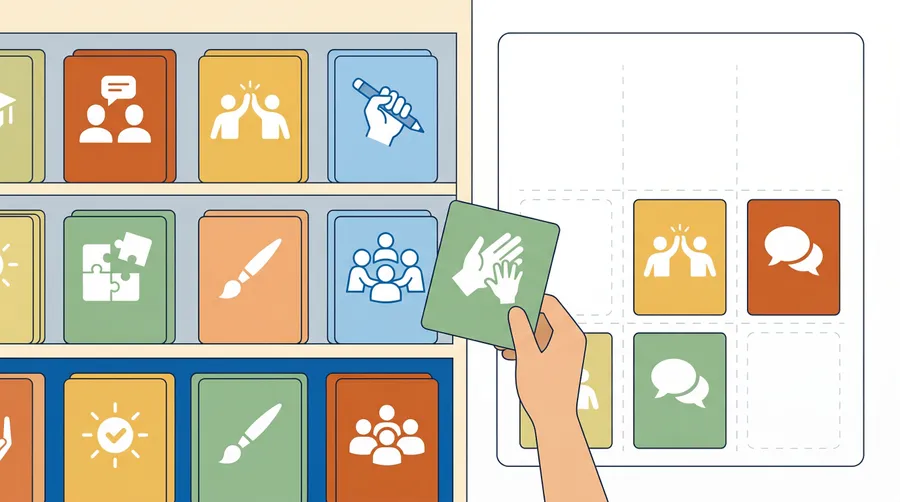
TallyFlex’s Template Library is organized into four tiers, each serving a different purpose.
Personal Templates
Your personal library. Save any target configuration you’ve built - operational definition, mastery criteria, prompt hierarchy, recording method, task analysis steps - and reuse it across clients. Only you can see these.
This is the simplest starting point. Built a great frequency target for hand-raising with specific criteria? Save it. Next client who needs hand-raising tracking gets that configuration in seconds instead of minutes.
Team Templates
Shared across your organization. When a clinical director defines the standard operational definition for “elopement” and the approved mastery criteria, they save it as a team template. Every BCBA and RBT on the team uses that exact configuration.
Team templates solve the consistency problem directly. New staff don’t have to guess how your organization defines behaviors or sets criteria. The standard is built into the template.
Curated Templates
TallyFlex provides 100+ professionally reviewed templates across 10 ABA domains:
| Domain | Examples |
|---|---|
| Communication | Manding, tacting, intraverbals, echoics |
| Social | Turn-taking, greetings, joint attention |
| Daily Living | Handwashing, toothbrushing, dressing |
| Academic | Letter identification, counting, reading |
| Behavior Reduction (paired with replacement teaching per BACB Code 2.14) | Elopement (paired with requesting break or movement), aggression (paired with FCT mand for break or attention), SIB with documented harm criterion (paired with sensory-replacement and FCT). Each curated template ships with the matched replacement-behavior target. |
| Play | Functional play, pretend play, parallel play |
| Motor | Fine motor, gross motor, imitation |
| Safety | Street safety, stranger awareness |
| Self-Management | Self-monitoring, coping strategies |
| Vocational | Task completion, following instructions |
Each curated template includes evidence-based operational definitions, recommended mastery criteria, and appropriate recording methods. They’re designed as starting points - import one, then customize it for your client’s specific needs.
Browse the full collection in the curated templates documentation.
Community Templates
Shared by practitioners across the TallyFlex community. When you build a target configuration that works well, you can share it with other practitioners. Community templates go through auto-moderation to ensure quality and appropriate content.
Community templates expand the library beyond what any single team could build. A BCBA specializing in early intervention shares their manding program templates. A school-based team shares their classroom behavior tracking configurations. The library grows with the community.
PHI Auto-Stripping - Templates With PHI-Stripping Safeguards
Here’s the part that matters for compliance: when you save any target as a template, TallyFlex automatically strips all Protected Health Information.
Client names, session dates, data points, notes - everything that could identify a specific individual is removed before the template is saved. What remains is the clinical configuration: the operational definition, mastery criteria, prompt hierarchy, recording method, and task analysis structure.
This means you can share templates across your team or with the community with reduced PHI exposure when you avoid putting identifiers into template text fields. The PHI stripping happens silently - structured data fields like client names, session data, and notes are stripped automatically when you save a template.
For teams managing HIPAA compliance, this is a meaningful safeguard. Template sharing becomes a clinical resource, not a compliance concern.
The Import Flow
Finding and importing a template takes seconds:
- Browse or search - Filter by domain, recording method, or keyword across any tier
- Preview - See the full configuration before importing: operational definition, mastery criteria, prompt levels, task analysis steps
- Use Template - Tap Use Template, select the client, and the target is created with fresh STO progress. No historical data carries over - your client starts with a clean slate
Templates are starting points. A curated manding template gives you evidence-based defaults, and you can always edit the target after importing to adjust criteria and definitions for your client’s current level and treatment goals.
Learn more about the import process in the browsing templates documentation.
How Templates Change Team Workflows
Templates shift how ABA teams operate in three specific ways:
Faster Client Onboarding
A new client that used to take 45 minutes of target setup now takes 5-10 minutes. Browse your team templates or curated collection, import the relevant configurations, customize for the individual, and start collecting data. The time savings compound with every new client.
Clinical Consistency Across Staff
When team templates define your organization’s standards, every practitioner uses the same operational definitions and mastery criteria. This eliminates the drift that happens when each BCBA independently writes definitions from memory. Consistency in definitions means consistency in data, which means clinical decisions are based on comparable measurements.
Knowledge Preservation
When a BCBA leaves your organization, their target configurations leave too - unless they’re saved as team templates. Template libraries preserve clinical knowledge independent of any individual staff member. The operational definitions, mastery criteria, and prompt hierarchies your team has refined over months or years stay accessible.
Getting Started
If you’re rebuilding targets from scratch for every client, start here:
- Save your best existing targets as personal templates. Pick the ones you’ve refined over multiple clients
- Explore curated templates across the 10 ABA domains. Import and customize the ones that match your caseload
- Create team templates for your organization’s standard configurations if you’re on a Teams plan
The saving templates documentation walks through the process.
Every minute spent rebuilding a target you’ve already built is a minute not spent on clinical decision-making. Template libraries turn one-time effort into reusable configurations that keep your team consistent, your onboarding fast, and your compliance intact.
TallyFlex makes target setup effortless. See how the Template Library works for your team.