· David Cruz · Schools & Special Education · 5 min read
One Client's Success Is Another's Starting Point: Reusing ABA Programs Across Learners
You built a great program for one learner. Why rebuild it from scratch for the next? Here's how to clone programs while preserving clinical consistency.
Key Takeaways
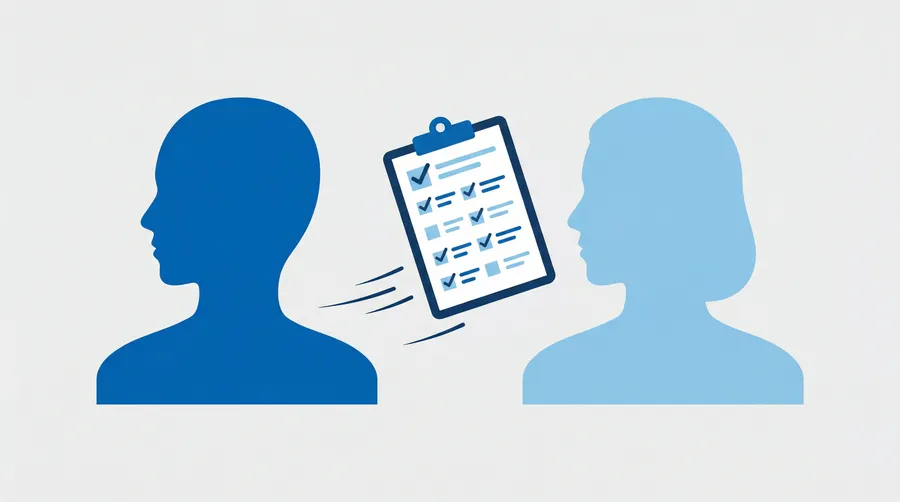
When you build a successful ABA program for one learner, you shouldn’t have to rebuild it from scratch for the next. Manually re-creating programs leads to inconsistent operational definitions, mismatched mastery criteria, and forgotten prompt hierarchies - especially in schools where paraprofessionals may set up programs differently than the supervising BCBA intended. TallyFlex solves this with Cross-Client Copy and a Template Library, letting you clone proven programs while preserving the clinical IP and resetting progress data for a fresh start.
You spent two hours building a comprehensive manding program - carefully worded operational definitions, evidence-based mastery criteria, a thoughtful prompt hierarchy, and STOs that scaffold from simple to complex. The learner progressed beautifully.
Now you have a new client who needs a similar program. You open a blank form and start typing the same definitions from memory. Except you don’t remember the exact wording you used. The mastery criteria are “something like 80% across 3 sessions” but you’re not sure if you used 3 or 5 sessions last time. The prompt hierarchy was customized but you can’t recall the order.
By the time you’re done, you have a program that’s sort of like the original - but with subtle inconsistencies that could affect data comparison, team training, and clinical outcomes.
This problem gets worse at scale. A BCBA supervising 15 clients doesn’t have time to rebuild the same functional communication program from scratch for each learner who needs one. A SPED coordinator rolling out a Behavior Intervention Plan (BIP) across 8 classrooms needs consistency, not 8 slightly different versions of the same program.
Why Clinical Consistency Matters
When programs differ across learners in unintended ways, three things break:
- Data comparison - You can’t compare outcomes across learners if the programs aren’t measuring the same thing the same way
- Team training - RBTs and paraprofessionals learn one program and discover the “same” program for another student has different definitions and criteria
- Treatment integrity - Inconsistent programs make fidelity monitoring harder because there’s no single standard to measure against
The goal isn’t cookie-cutter programming. Every learner is different, and programs should be individualized. But the foundation - operational definitions, recording methods, prompt hierarchies - should start from a proven template, then get adjusted for the individual.
How TallyFlex Makes Program Reuse Easy
TallyFlex, an ABA data collection app designed for team consistency, provides two ways to reuse programs across learners: Cross-Client Copy for direct cloning, and the Template Library for saving and sharing program structures.
Cross-Client Copy
The fastest path from “this program works” to “let’s use it with another learner.”
When you copy a program from one learner to another, TallyFlex:
- Preserves the clinical structure - Operational definitions, recording method, behavior class, goal direction, mastery criteria, prompt levels, and task analysis config copy exactly as they are
- Resets progress data - The new learner starts fresh. No leftover session data or mastery progress from the source
- Resets color - The copied program gets a fresh color assignment, independent of the source
Learn more in the Cross-Client Copy guide.
Template Library
For programs you want to reuse repeatedly - not just once - the Template Library lets you save program structures as reusable templates.
- Save any program as a template with one tap
- Browse your saved templates when setting up a new learner
- Share templates within your team for organization-wide standardization
- Import from curated templates built on evidence-based practices
See the Template Library guide for setup details.
The Schools Angle: Standardization Without Rigidity
For SPED coordinators and behavior specialists managing programs across classrooms, consistency is a daily battle.
Consider this scenario: A district adopts a standard social skills program for students with autism across 12 classrooms. Without a template system, each paraprofessional sets up the program independently. By week three, you have 12 variations - different operational definitions for “initiating a conversation,” different mastery criteria, different prompt levels.
With TallyFlex’s template system, the coordinating BCBA or behavior specialist can:
- Build the master program once with precise operational definitions and mastery criteria
- Save it as a template in the shared library
- Distribute to classrooms - each para imports the template for their students
- Adjust for individuals - modify targets or criteria for specific students while keeping the core structure intact
The result is programs that are consistent where they need to be and individualized where they should be.
Demo Client as a Starting Point
New practitioners joining a team can explore the demo client to see how programs are structured before creating their own. It’s a low-stakes way to understand TallyFlex’s program architecture, including how STOs, mastery criteria, and prompt hierarchies fit together. See the demo client guide for details.
What Gets Preserved vs. What Resets
Understanding what carries over during a copy is important for clinical planning:
| Element | Copies? | Why |
|---|---|---|
| Operational definitions | Yes | The clinical IP - how behaviors are defined |
| Recording method | Yes | Keeps measurement consistent |
| Behavior class | Yes | Maintains classification across learners |
| Goal direction | Yes | Preserves whether increase or decrease is the target |
| Mastery criteria | Yes | Evidence-based thresholds should stay consistent |
| Prompt levels | Yes | Team consistency depends on identical prompt levels |
| Task analysis config | Yes | Step-by-step structure transfers across learners |
| Status | Resets to baseline | Each learner starts fresh |
| Session data | No | No carryover from the source learner |
| STO progress | No | Progress resets for the new learner |
| Target color | Resets | Fresh color independent of source program |
Getting Started
If you’re building programs from scratch for every learner, start here:
- Identify your most successful program - the one with clear definitions, good mastery criteria, and proven outcomes
- Use it as your template - save it to your library or copy it directly to another learner
- Adjust for the individual - modify targets, criteria, or prompt levels as needed for the new learner
- Build a library over time - each well-built program becomes a starting point for future learners
What’s Next?
- Cross-Client Copy - Step-by-step guide to cloning programs between learners
- Saving Templates - Save programs as reusable templates for your team
- Programs Overview - Understand how Hierarchical Programs work in TallyFlex
Your best programs shouldn’t live and die with a single learner. TallyFlex makes every successful program a foundation for the next one.